IN THE TRACE OF INK
Tattoo industry

What is a keloid?
Why does it occur?
Are bumps and keloids the same thing?

First, let's briefly explain what a keloid is... A keloid is a hard, raised scar that grows beyond the boundaries of the wound and forms when the body produces excessive collagen after an injury or irritation to the skin ("cut, pimple, vaccination, piercing, tattoo, surgical scar").
Keloid formation after piercing.

-
Piercing keloids are itchy, red/purple, firm, and potentially swollen scar tissue that forms as a result of excessive collagen production during the healing process, particularly in areas such as ear cartilage.
-
Often mistaken for simple bumps (piercing bumps), keloids can grow over time and don't go away on their own. Treatment may require a dermatologist, cortisone injections, or surgery.
Differences Between Keloids and Piercing Swelling/Bumps
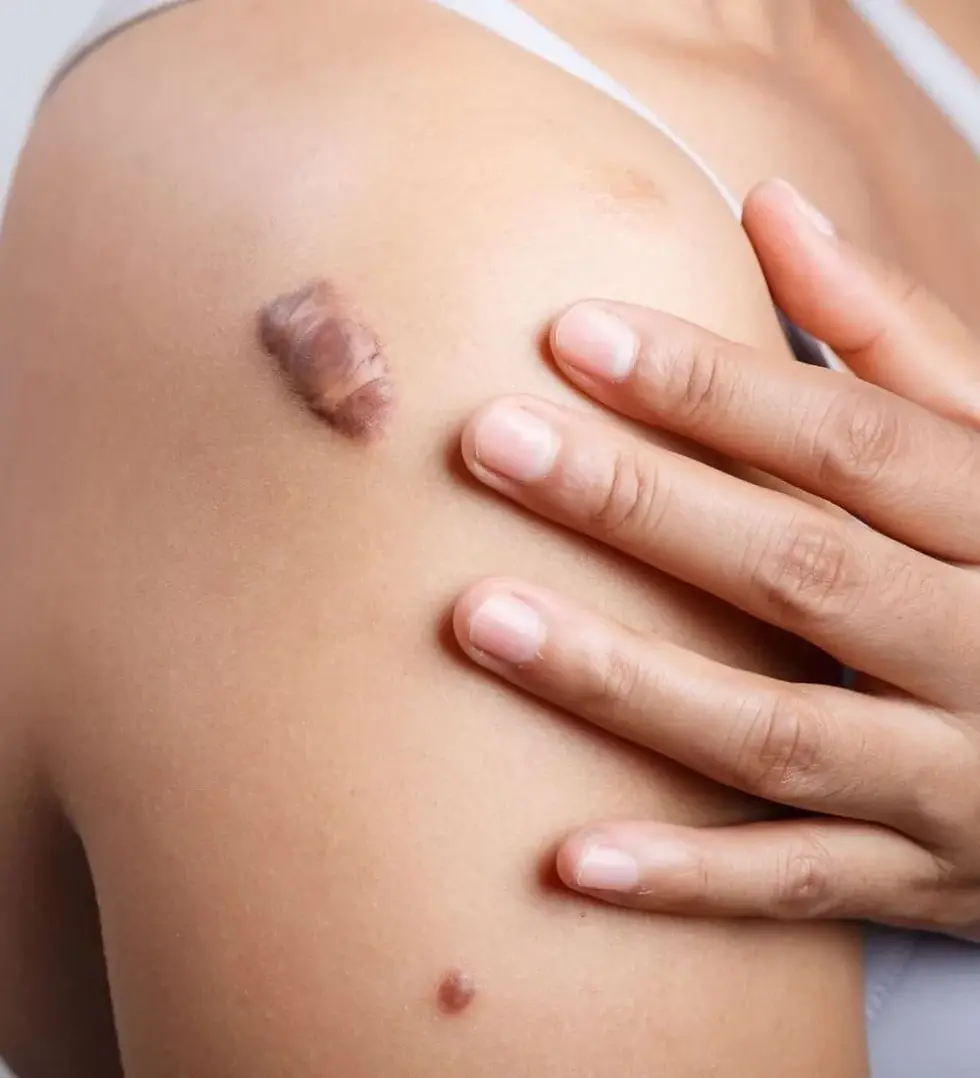

Keloid Piercing Swelling (Bump)
Keloid: Grows beyond the boundaries of scar tissue, is hard, persistent, and requires treatment.
Piercing Swelling (Bump): Usually caused by irritation, infection, or improper use of jewelry, typically minor, and resolves with proper care (salt water solution, etc.).
Symptoms and Causes

Appearance: Red, pink, or skin-colored fluffy texture.
Sensation: Itching, pain, or tenderness.
Occurrence: It usually appears 1-3 months or even longer after the piercing procedure.
Risk Factors: This is more common, especially in cartilage piercings, and in areas that are infected or constantly irritated.
Prevention Recommendations
Do not touch or play with the piercing area.
Wearing high-quality, hypoallergenic jewelry (for example, titanium).
Clean the piercing with sterile saline solution 1-2 times a day.
Be careful not to put pressure on the piercing while sleeping.
Note: If the swelling continues to grow or the pain intensifies, it is best to see a dermatologist.
For more detailed information about "Keolid," please also check out this page...
Keloids form when the skin produces an excessive amount of fibroblast cells and collagen uncontrollably during its healing process. They are usually triggered by the following reasons:
Surgical incisions and scars.
Acne and chickenpox scars.
Piercing, tattooing, and ear piercing.
Burns and vaccination sites.
Keloid formation occurs due to excessive collagen production. A raised, firm, and sometimes itchy tissue develops that extends beyond the wound boundaries. Keloids are generally harmless. However, they can be aesthetically bothersome and in some cases may cause mild pain or tenderness.
No, keloids don't shrink or disappear on their own. If left untreated, they can continue to grow for years and become permanent.
Yes, keloids can be itchy, tender, or sometimes painful. Itching is especially common during their formation, and they can cause discomfort due to friction against clothing.
Keloid treatment can be challenging and often requires a combination of multiple methods. The most common methods are:
Corticosteroid (Steroid) Injections: These injections are administered into the wound to reduce and flatten the keloid.
Silicone Gel/Dressing: Silicone products applied to the keloid help the scar fade.
Cryotherapy (Freezing Treatment): Freezing small keloids with liquid nitrogen.
Laser Treatment: Used to fade and flatten the keloid.
Surgical intervention: The keloid can be surgically removed, but because of the high risk of recurrence, it is usually combined with radiotherapy or steroids.
Yes, keloids have a very high risk of recurring (recurring) after treatment. They tend to reappear in the same location, especially after complete surgical removal.
Individuals under the age of 30.
People with dark skin (Black, Latino, Asian).
Those with a family history of keloids (genetic predisposition).
Pregnancy and adolescence (due to hormonal changes).
-
Keloids are benign lesions and do not transform into cancerous cells.
-
-
For diagnosis and treatment of keloids, you should consult a Dermatology (Skin Diseases) or Plastic, Reconstructive and Aesthetic Surgery department.
-
"The page content is for informational purposes only; for diagnosis and treatment, please consult your doctor."


