IN THE TRACE OF INK
Tattoo industry

Are you thinking about getting a tattoo?
You're in the right place...
To get a tattoo or not to get one?

Eğer sorunuz buysa, bu vücut modifikasyonu türüne başlamadan önce göz önünde bulundurmanız gereken tüm bilgileri bulmak için doğru yere geldiniz. Devam etmeden önce bunu araştırıyor olmanız, sonunda bilinçli bir karar vereceğinizin ve mürekkebinizi sonsuza dek seveceğinizin iyi bir işaretidir.
Bu yazıda dövmelerin tarihinden (çünkü gerçekten oldukça büyüleyici) düşünebileceğiniz dövme türlerine ve karşılaşabileceğiniz olası sağlık risklerine ve bunlardan nasıl kaçınacağınıza kadar her şeyi ele alıyoruz.

We also explain how to properly care for a new tattoo, the signs that your tattoo might be infected (don't worry, this isn't very common if you follow our guidelines on choosing a hygienic place to get your tattoo), and what to do if it is. Finally, we explore tattoo removal methods and their side effects. Let's get started...
How does the tattooing process work?

Getting a tattoo is both an artistic and personal experience. Here are some things to consider when getting a tattoo:
1. Choosing a Tattoo Artist: Before getting a tattoo, it's important to review the artist's portfolio. The artist's style should align with your preferences.
2. Hygiene and Safety: It is crucial that a professionally certified tattoo studio operates in accordance with strict hygiene standards.
3. Design and Location: Deciding on the size and placement of the tattoo is one of the factors that affect its aesthetics.
At DovmeSektoru.com, we suggest you consider whether you want to see your tattoo every day. For example, an arm tattoo is more visible than a chest tattoo. Consider where you want to be seen with your tattoo and your personal preference. If you can't decide where to get it, we recommend the inside of your arm.
Dövmeler büyük ve öneli bir seçimdir. Cildinize kalıcı olarak hangi tasarımın işleneceğine dair acı çekmek bulmacanın sadece bir parçasıdır. Öncelikle tasarımın vücudunuzda nereye gideceğine karar vermelisiniz. Yerleşim önemlidir, özellikle cildiniz gibi yaşayan, büyüyen bir şeyde. Yerleşimi seçerken estetik, dövmenin ne kadarını göstermek istediğiniz ve ne kadar acıya dayanabileceğiniz gibi şeyleri düşünün.

Each canvas can be called a piece.
These "canvases" or sections are divided by the joints of your body. For example, the section from the top of your thigh to your knee is a "canvas."
Consider each of these canvases in turn for placing your tattoo.
For example, the part of your arm from the top to your elbow is called a "half-sleeve," while the entire arm from the top to your wrist is called a "full-sleeve." If you're interested in a smaller arm section that can be covered by a short-sleeved shirt, you might want a "quarter-sleeve," ending mid-bicep.
As another example, a back piece traditionally goes from below your neck to below your hips. Understanding where these pieces traditionally go will help you tell your tattoo artist exactly what you want.
By visually dividing your body into sections, you can understand which designs work best in each area. You're looking for the best small and large areas on your body where tattoos can go.
Place large, detailed pieces on large parts of your body.

Creating a very detailed design in a small area is almost impossible. If you want a detailed design, you need to choose a larger area of your body for the design to work.
For a large design, such as a portrait or character, choose skin areas like the back, thighs, or upper arms that your artist can easily reach without bending you over.
Place small designs on smaller areas of your body.

For smaller designs, like symbols, you can choose much smaller areas.
For example, you can place it on the inside of your wrist or hand.
You could even opt for a more unusual layout.
Try it behind your ear, around a finger, or behind your ankle joint.
For a touch of quirkiness, consider rewinding your ear or the inside of your lip!
Choose a location based on the shape of your tattoo.
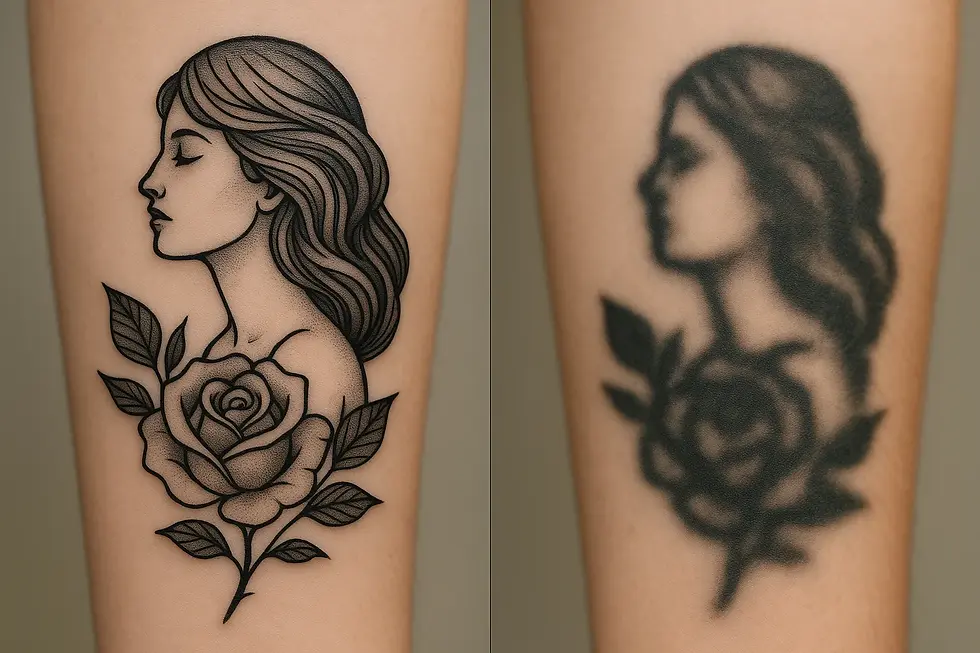
.jpg)
Look at the design of your tattoo. Is it long and thin? Round? Rectangular or oval? The shape matters, as different shapes will look better on different parts of your body.
For example, a long, thin tattoo might look beautiful along your spine, down your forearm, or down your leg. They might also look great on the sides of your back or stomach, but keep in mind that their shape can change as you gain weight or have a baby.
You can wrap some kind of design, like tribal tape or rosary beads, around a limb. Choose an area that will allow the artist to complete the design evenly, for example, the upper forearm, biceps, or just above the ankle.
Avoid covering a large area for a small tattoo.
.jpg)
Many people regret having a small tattoo in the middle that covers a large portion of their tattooable area. They may then want to get more tattoos in that area or a large tattoo that covers everything.
For example, if you had a small symbol tattooed in the middle of your shoulder blade, you can't later get a larger tattoo there; however, you can incorporate that symbol into the design or cover it with a completely new design.
Choose a place you'll still enjoy as you get older.

When considering getting a tattoo, think about what might happen as your body ages. Will you always like the tattoo in that particular spot? It might not be a problem in your 20s, but think about how you'll feel in your 40s, 50s, or 60s. You might want to get your tattoo done in a way that will make your body less susceptible to the aging process.
For example, you're less likely to gain weight in the back of your shoulders than in your stomach. In fact, stretch marks from having children can completely hide a tattoo. Therefore, your shoulder blades might be a better option.
Similarly, you're unlikely to gain much weight in your ankles or feet, so they can be a good option. Your feet might swell or enlarge occasionally, but tattoos generally maintain their shape.
Method 2 - Visible Selection
If you want to be able to easily see your tattoo, your body
Have it done on the front.
.jpg)
Some people like to be able to see their tattoos all the time, while others don't. If you like them, get them somewhere you can see them without a mirror, like your stomach, chest, arms, or legs. If you don't like them, get them somewhere you can only see them when you look in a mirror.
As an alternative, you can choose a spot where you can see without needing a mirror, but where your body is covered by clothing.
Try a spot where you can either conceal or reveal it, depending on your outfit.
.jpg)
You might want to display your tattoo and place it where people can always see it. On the other hand, you might want to have the option of concealing it from time to time by choosing a different piece of clothing. If you want to be able to conceal it, choose a place where you have that option.
For example, if you have a tattoo on your trapezius muscles, located between your neck and shoulders, you can cover it with a collared shirt or choose a low-necked shirt to show it off.
You can do the same thing with tattoos on your thighs, upper arms, back, and feet.
For a fun placement, try a "seeing" tattoo.
.jpg)
These tattoos are placed in areas that are generally not very visible to a casual observer, but they become apparent when you move, such as behind your ear, inside your lip, between your fingers, or on the inside of your upper arm.
You can also try the upper part of your chest, lower back, collarbone, or the back of your ankle.
Keep delicate, colored tattoos hidden from the sun.
.jpg)
Tattoos fade over time, and the sun accelerates this process. If you want a multicolored tattoo, it's best to place it in a location where it can be hidden by clothing. This way, the sun won't reach it too much, preventing it from fading quickly.
The sun also causes your skin to age faster, which can diminish the beauty of your tattoo.
Protect both your skin and tattoo colors with a broad-spectrum sunscreen.
If you need to keep your tattoo for work, put it in a hidden place.
.jpg)
If you're worried about hiding your tattoo at work or from certain people, choose a location where it can be easily concealed. The torso is a good option for a hidden tattoo, as you can easily cover that area if needed.
You can also try your upper thighs, shoulder blades, back, or sides, as these areas are often concealed by professional clothing.
Method 3-
Working Within Your Pain Tolerance
For minimal pain, target "meatier" areas like the thighs or biceps.
.jpg)
If this is your first tattoo, these two locations might be a good choice. They tend to be less painful than other areas due to the muscle tissue involved.
The forearm or the back of the shoulder are also good choices. However, if you have a low pain tolerance, you may want to skip the inner upper arm as it has many more nerve endings.
For pain in the lower to mid-range, consider the calves or shoulders.
.jpg)
These areas still provide quite a lot of muscle for the needles to strike. They have slightly more bone than the thighs or biceps, but still have more cushioning than other areas.
The wrists also fall into this category, but they tend to hurt a bit more.
Avoid bony areas to reduce pain.
.jpg)
Bony areas like your feet, hands, ribs, knees, and elbows will cause more pain. Getting a tattoo will unfortunately hurt, but it's likely to hurt more if you get one in one of these areas.
These areas are painful because there isn't much flesh between the needle and the bone. However, you may prefer to start in these areas to set your pain tolerance to a high level.
Talk to your tattoo artist about your pain tolerance.
.jpg)
If you are particularly sensitive to pain, ask the artist about good places to get a tattoo.
The tattoo artist will know which areas hurt the most.
Tips
Be willing to listen to your tattoo artist. Of course, you should have an idea of where you want the tattoo to go, but your tattoo artist can help you with small adjustments that will make the placement much better.
Tattoos naturally draw attention to that area of the body, so choose a location where you won't feel uncomfortable with people looking at them.